Showing posts with label History. Show all posts

15 June 2015

Mehrgarh: The Hidden Archeological Treasure

Courtesy: Balochistan Inside


In any civilized society archaeological sites are cherished as national treasures. Archaeology acts as conduit that allows the humans to look into the past beyond the written records. Pakistan is also rich in archeological treasures but it doesn’t give equal attention to all of them. MoenjoDaro, Harappa and Shahlamar gardens are given more importance than Mehrgarh in Balochistan.

01 February 2015

The Pakhtun-Baloch relationship


Last Sunday, an article published in The News on Sunday, titled Pakhtuns in Balochistan, was a rant about lack of autonomy of Pakhtuns of Balochistan. The author of that article has given an impression, between the lines, that Baloch are responsible for the current plight of the Pakthuns of Balochistan. Historical facts have been twisted by the author to prove his point, which need to be corrected.

05 July 2014

5th July, a Black Day in the history of Pakistan

Courtesy: The Balochistan Point


5th July is a black day in history of Pakistan. 37 years ago on this day, a military dictator, General Zia-ul-Haq toppled a democratic government. General Zia ruled Pakistan for 11 years till his death. He destroyed entire social fabric of the society and turned Pakistan into a safe haven for terrorists, drug lords and sectarian monsters. It can be said that on 5th of July 1977, a civilian dictatorship came to an end and it was replaced by a brutal military dictatorship that changed Pakistan forever.

21 June 2014

History of BSO

Courtesy: ViewPoint Online


The Baloch Students Organisation, or BSO, has earned itself national recognition in recent months. However, many outside of Balochistan hardly know either its history or various factions and their respective affiliations. Below is an attempt to trace BSO’s roots and map its various factions. 

13 June 2014

Khair Baksh Marri: A man of Principles

Courtesy: The Balochistan Point


On 10th June 2014, Nawab Khair Baksh Marri breathed for the last time. He was one of the most respected and revered politicians and tribal leaders of Balochistan. He epitomized a person who never compromises on his principles. It’s indeed a great loss of people of Balochistan because the man of Principles is no more.

14 January 2014

Murder of History

Courtesy: Laaltain Magazine


Khurshid Kamal Aziz, commonly known as K. K. Aziz, was a renowned Pakistani historian. During his illustrious career, he taught at many reputed universities home and abroad including University of Cambridge. He authored many books about history, the most famous of them being Murder of History. This book is primarily a critique of the school textbooks taught in Pakistan. Mr. Aziz has identified errors taught in history and tried to correct them. This is a must read book for every Pakistani, especially for those whose only source of history has been the school textbooks. Author has uncovered the major distortions of history in school textbooks and also provided a correct version of history.

16 September 2013

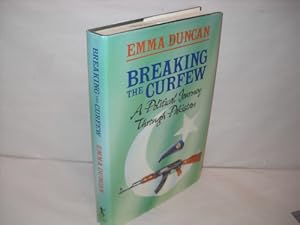
Breaking the curfew: An overview


Emma Duncan is the current deputy editor of economist magazine. In late 1980s , She was Economist's correspondent in New Delhi. In 1988-89 she spent 8 months in Pakistan, visiting many places and meeting people from all walks of life. She compiled all her experiences and used them to write her maiden book, Breaking the Curfew. The book published in 1989 proved to be epic and received positive reviews across the board. I have read this book twice and found it completely absorbing and enriched with bits of information that we inquisitively want to know.

03 September 2013

In Search of Solutions

In Search of Solutions is the title of the autobiography of Baba-e-Balochistan Mir Ghaus Baksh Bizenjo, one of the greatest politicians in the history of Balochistan. The book is based on personal notes about his life and political career which were edited by his former political secretary, B. M. Kutty, and published in the form of a book in 2009. From the prolific political career of Mir Bizenjo which started in 1939 and continued for 50 years till his death in 1989, In Search of Solutions covers events from his childhood till the political developments of 1973. During his 50 years political career, he spent at least 10 years in prison. His autobiography not only provides an insight into various political issues, it also uncovers some very important facts which were previously unknown.

17 August 2013

The Crash of Pak One


President Zia-ul-Haq waved to the army officers who had come to see him off. He then boarded Pak One, the call sign of C-130 which was used as Presidential plane. Pak One took off from Bahawalpur airstrip at 4:30 pm. Pak one was followed by a Cessna reconnaissance plane carrying General Aslam beg, the vice chief of army staff. A few minutes after takeoff, Pak One crashed in plains of Bahawalpur district resulting in death of Zia-ul-Haq and 30 others. General Aslam beg saw the site of plane crash and instructed his pilot to fly to Islamabad. On 17th August 1988, 11 year dictatorial regime of General Zia-ul-Haq was finally over.

05 August 2013

Baba-e-Balochistan: Ghaus Baksh Bizenjo

Balochistan is Pakistan's most turbulent province and it has been since 1947. These days Balochistan is in news and social media a lot. There are a lot of people who share their opinion about issues relating to Balochistan. Some people have knowledge about Balochistan while others are simple ignorants who just make comments about Balochistan relating issues for the sake of trolling. Knowledge about Balochistan is incomplete without knowing about Baba-e-Balochistan; Ghaus Baksh Bizenjo. Attaullah Mengal, former Chief minister of Balochistan and a veteran Baloch politician, said about Ghaus Baksh Bizenjo that "He can't live without politics. He has to have it or He will perish." He remained in the political arena for 5 decades and He is arguably the most respected politician in history of Post-Partition Balochistan.

02 August 2013

Dismissal of NAP government in Balochistan


In 1972, the remaining Pakistan was at its turning point. Military regime of Yahya Khan had given up power and Z.A Bhutto had got control of the reins of the country. He had a golden opportunity to create a new Pakistan and reverse all the injustices of the past. He had full authority and public support but He missed the opportunity. Instead, he spent his entire 5 and half years stint to increase his powers by hook or crook. One of the blunders that he Committed was the dismissal of NAP government in balochistan and subsequent military operation which took lives of thousands of persons. History will never forgive Bhutto for this act as it laid the foundations of an approach which never allowed Balochistan to be part of Mainstream power structure in Pakistan. Current conflict in Balochistan can be traced down to the dismissal of NAP government.

31 July 2013

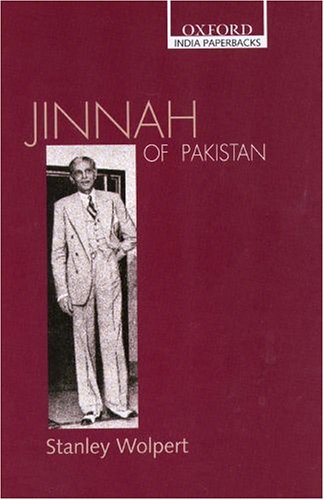
Extracts from "Jinnah of Pakistan"


Stanley Wolpert, the famous Indo-Pak historian published the most authentic biography of Quaid-e-Azam Mohammed Ali Jinnah in 1984. This book was published after 15 years of research by Stanley Wolpert. He interviewed many people who were  relevant to Quaid-e-Azam including the last viceroy of India Lord Louis Mountbatten. It was also Stanley Wolpert, who in this book wrote the epic quote about Quaid-e-Azam:

29 July 2013

A Journey to disillusionment: A review


Sardar Sherbaz Mazari is a veteran politician of Pakistan. He endeavoured to write the story of his political life in a book. He managed to author one of the most critically acclaimed autobiographies in 65 year old history of Pakistan. A journey to disillusionment, the title of the book, truly reflects the main premise of this book. Mr. Mazari has openly discussed how He has been disillusioned by Pakistani politicians. This book is fascinating from start to finish and absorbs the reader completely.

08 November 2012

Glimpse into the History - Part 1


I recently finished reading autobiography of former politician Sardar Sherbaz Mazari, A journey to disillusionment. Its a very useful and informative book and can be considered as a chronological political history of Pakistan from 1947 to 1988. Apart from many other subjects this book also has historical information about Balochistan and Baloch tribes. During the course of reading this book, I found out two issues of paramount importance related to Balochistan that I want to share in this article. One is about Mughal emperor Humayun in Balochistan and second is the story of how Dera Ghazi Khan  and Rajanpur were acceded to Punjab rather than Balochistan.